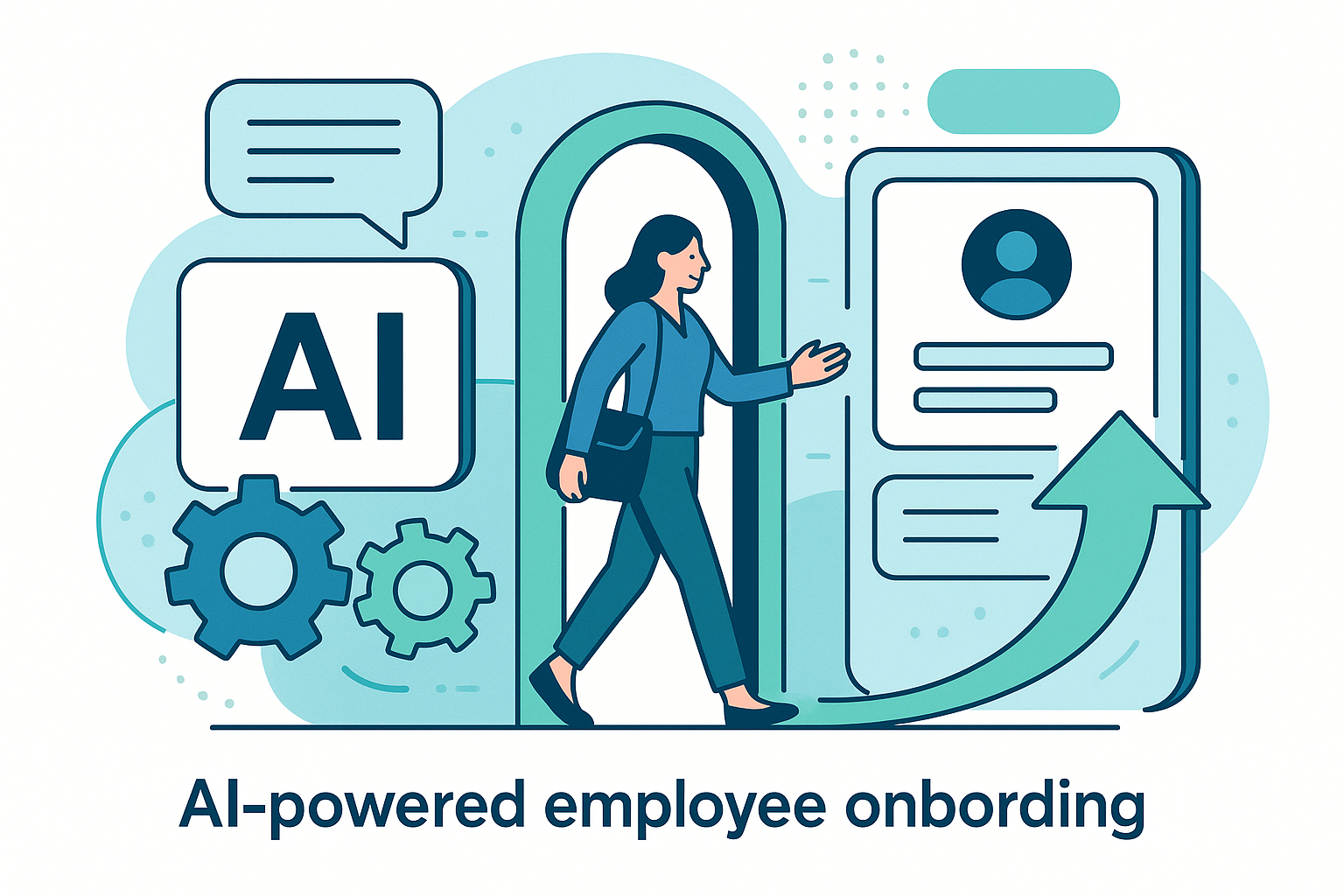
Introduction to AI in Employee Onboarding
In today's fast-paced business environment, employee onboarding is more critical than ever. An effective onboarding process not only integrates new hires smoothly but also sets the foundation for their long-term success within the organization. With the advent of artificial intelligence (AI), the traditional onboarding process is being reimagined, offering more streamlined, efficient, and personalized experiences for new employees. AI-powered onboarding can address common challenges such as engaging remote workers, reducing time to productivity, and ensuring compliance with company policies.
It's important to note that poor onboarding can have significant negative impacts; studies show that organizations with inadequate onboarding processes experience up to 20% higher employee turnover within the first 45 days.
Benefits of Using AI for Onboarding Processes
There are several compelling benefits to incorporating AI into onboarding processes:
- Personalization: AI can tailor the onboarding experience to each new hire, adapting training materials and schedules to match individual learning styles and paces.
- Efficiency: By automating repetitive tasks, AI reduces the administrative burden on HR teams, allowing them to focus on strategic activities.
- Consistency: AI ensures that all employees receive the same quality of onboarding, minimizing human error and bias.
- Scalability: AI solutions can easily scale to accommodate a growing workforce without the need for additional HR resources.
- Data-Driven Insights: AI can analyze onboarding data to identify trends and areas for improvement, enhancing the overall process.
Key AI Tools and Technologies for Streamlined Onboarding
Several AI tools and technologies can revolutionize the onboarding process:
Chatbots and Virtual Assistants
Chatbots can handle routine inquiries about company policies, benefits, and procedures, providing immediate assistance to new hires. Virtual assistants can guide employees through the onboarding process, ensuring they complete necessary forms and training modules.
Machine Learning Algorithms
Machine learning can be used to analyze onboarding patterns and predict potential challenges new hires might face, allowing proactive intervention. These algorithms can also continuously improve onboarding materials based on feedback and performance data.
Natural Language Processing (NLP)
NLP enables AI systems to understand and respond to human language, facilitating more natural interactions between new employees and digital onboarding platforms. This technology enhances the user experience by making systems more intuitive and user-friendly.
Best Practices for Implementing AI in Onboarding
To successfully integrate AI into your onboarding process, consider the following best practices:
- Define Clear Objectives: Before implementing AI, establish clear goals such as reducing time to productivity or improving employee engagement.
- Ensure Data Privacy and Security: Protect sensitive employee information by adhering to data protection regulations and implementing robust cybersecurity measures.
- Start Small: Begin with a pilot project in a specific department to test the AI solution's effectiveness before scaling up.
- Involve Stakeholders: Engage HR professionals, IT teams, and new hires in the design and implementation process to ensure the solution meets everyone's needs.
- Provide Training: Offer training sessions to help HR staff and employees understand how to use AI tools effectively.
Measuring the Success of AI-Enhanced Onboarding
To evaluate the impact of AI-enhanced onboarding, consider these key performance indicators (KPIs):
- Time to Productivity: Measure the time it takes for new hires to become fully productive. AI can potentially reduce this timeframe by an estimated 20-30%.
- Employee Engagement: Use surveys and feedback tools to assess new hire satisfaction and engagement levels during the onboarding process.
- Retention Rates: Track retention rates of employees who underwent AI-powered onboarding compared to those who experienced traditional methods.
- Cost Savings: Calculate the reduction in onboarding-related costs, such as administrative overhead and training expenses.
Hypothetical Tracking Example
Imagine a tech company that implements AI-powered onboarding. Initially, their average time to productivity is 60 days. By integrating AI, they reduce this to 45 days within six months. Employee engagement scores, measured through quarterly surveys, show a 15% improvement, while retention rates in the first year increase by 10%.
Methodology Notes
To effectively track these KPIs, organizations should establish a robust data collection framework. This includes setting up systems to gather both quantitative and qualitative data, such as training completion times and employee feedback. Analyzing this data regularly will help identify trends and inform continuous improvement efforts.
By leveraging AI technologies, HR professionals can create a more efficient, engaging, and effective onboarding experience that benefits both the organization and its new employees. Embracing these innovations will set the stage for future success and a more dynamic workplace.